2026 High-Brightness LCD Display Buying Guide: Technical Points, Pitfall Avoidance and Recommended Quality Manufacturers
Posted by Shenzhen Zhunyi Technology | Updated: 2026.04
With the increasing demand for outdoor display, automotive terminals, industrial control and other scenarios, high-brightness LCD displays have become a market rigid demand. Relying on their advantage of clear display in strong light environments, they are widely used in automotive instruments, outdoor self-service terminals, medical equipment, industrial control panels and other fields. However, many purchasers and R&D personnel are often troubled by parameters such as "peak brightness", "panel type" and "power consumption control" when purchasing high-brightness LCD displays, and even step on pitfalls, leading to project delays and cost overruns. Combining industry experience and technical standards, this article comprehensively analyzes the core knowledge of high-brightness LCD displays, purchasing pitfall avoidance skills, and recommends reliable manufacturers to help enterprises quickly select the right products and reduce purchasing risks — this article is full of practical information, adapted to SEO search habits, and helps improve website ranking.
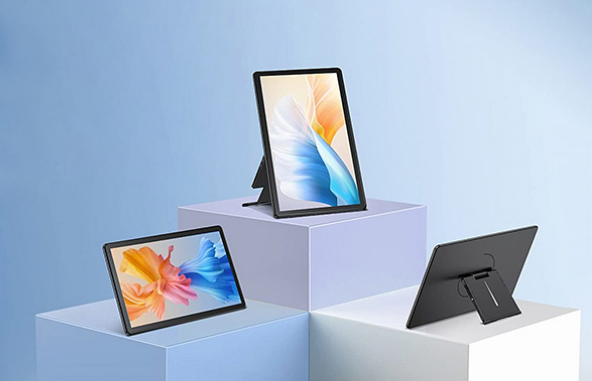
Image Description: High-Brightness LCD Display by Shenzhen Zhunyi Technology, Suitable for Outdoor, Automotive and Industrial Scenarios. This high-brightness screen can maintain clear visibility under direct sunlight, with stable performance and accurate color reproduction, applicable to various harsh environments.
I. What is a High-Brightness LCD Display? Core Definition and Brightness Classification
Many people mistakenly believe that "the higher the brightness, the better the high-brightness screen". In fact, there is a clear industry standard: usually, an LCD display with a brightness exceeding 800cd/m² (candela per square meter, abbreviated as Nit in English) can be called a high-brightness LCD display. Its core advantage is that it can still maintain clear visibility and accurate colors in strong light environments (such as direct outdoor sunlight and strong light in industrial workshops), solving the pain point that ordinary LCD screens are hard to see and have blurred details outdoors.
According to the brightness range, high-brightness LCD displays can be divided into 4 levels. Different levels correspond to different application scenarios. During purchasing, you can accurately match the needs to avoid over-purchasing or insufficient parameters:
800–1500 cd/m²: Regular high-brightness screens, suitable for outdoor charging piles, self-service terminals, automotive central control and other scenarios, which can meet the needs of cloudy days and ordinary outdoor lighting;
1500–3000 cd/m²: Ultra-high brightness screens, suitable for outdoor scenarios with direct sunlight (such as outdoor advertising machines, marine vessel displays) and military equipment;
>3000 cd/m²: Special high-brightness screens, mainly used in extreme strong light environments such as aviation and special vehicles, with high technical thresholds;
400–700 cd/m²: Medium-brightness screens, although not strictly high-brightness screens, are suitable for indoor strong light environments (such as industrial plants, hospital operating rooms) and can be used as a transitional choice.
It should be noted here: the ambient light intensity directly determines the required screen brightness. For example, ordinary indoor (200–300 LUX) only needs 250–350 cd/m², while direct outdoor sunlight (>20000 LUX) requires a high-brightness screen of ≥1500 cd/m². Blindly pursuing high brightness will increase power consumption and purchasing costs. Accurately matching the scenario is the optimal choice.
II. Core Technical Parameters of High-Brightness LCD Displays: Must-See for Selection (Core Keywords Affecting SEO Ranking)
When purchasing high-brightness LCD displays, focus on 5 core parameters, which directly determine product stability, display effect and service life. They are also the most frequently searched keywords by purchasers. Mastering these parameters accurately can help you avoid 80% of selection pitfalls:
1. Brightness: Be Alert to the "Peak Brightness" Trap
Many manufacturers will mark "peak brightness" to mislead purchasers. In fact, peak brightness is the short-term maximum brightness, which cannot operate stably for a long time. Long-term use will lead to brightness attenuation, color deviation and other problems. During purchasing, you need to clearly require the manufacturer to provide a continuous brightness test report, prefer products marked with "typical brightness", and pay attention to brightness uniformity (in line with IEC 61747-5-5 standard, with a difference of ≤15% in each area) to avoid uneven brightness in local areas of the screen.
2. Panel Type: IPS Panel is the First Choice for High-Brightness Scenarios
The panel types of high-brightness LCD displays are mainly divided into IPS, TN and VA. Different panels have great differences in adapting to scenarios, which need to be accurately distinguished during purchasing:
IPS Panel: 178° wide viewing angle, accurate color reproduction, no color deviation or distortion even in strong light. It is suitable for scenarios that require multi-angle viewing such as automotive, medical and industrial control, and is the preferred panel for high-brightness screens;
TN Panel: Low cost and fast response, but the viewing angle is extremely poor, and color deviation is serious in strong light. It is only suitable for simple display equipment with no requirements on viewing angle (such as electronic watches and ordinary instrument panels);
VA Panel: High contrast ratio and pure black field, but slow response speed. It is suitable for static display scenarios such as outdoor advertising machines, but not for dynamic display automotive and industrial control equipment.
3. Power Consumption and Heat Dissipation: Key to Long-Term Stable Operation
The power consumption of high-brightness LCD displays is usually 1.5~2 times that of ordinary LCD screens. The higher the brightness, the greater the power consumption. If the heat dissipation design is not in place, it will lead to shortened screen life, black screen, color deviation and other failures. During purchasing, you need to pay attention to the heat dissipation structure of the product, prefer products using high-quality LED light strips and industrial-grade control cards, and require the manufacturer to provide a power consumption test report to ensure stable performance under long-term high-brightness operation.
4. Interface and Compatibility: Avoid "Lighting Failure"
Interface type directly affects the compatibility between the screen and the mainboard. Common interfaces include SPI/MCU, RGB, MIPI, LVDS, etc. Different scenarios are suitable for different interfaces: MIPI interface is preferred for automotive scenarios (low power consumption, high-speed transmission), and RGB and LVDS interfaces are suitable for industrial control scenarios (stable and reliable). During purchasing, you need to clarify the interface type of your own mainboard to avoid interface mismatch and lighting failure. At the same time, pay attention to the power-on sequence. A reliable manufacturer will provide technical support to assist in debugging and lighting.
5. Service Life and Reliability: Reduce Long-Term Maintenance Costs
The service life of high-brightness LCD displays mainly depends on three components: light strips, control cards and power supplies. High-quality products have a continuous operation life of ≥50000 hours, and the brightness retention rate (after long-term aging) is ≥80% (in line with ASTM E308 standard). During purchasing, you need to confirm the brand of lamp beads (such as Samsung and LG), require the manufacturer to provide a light decay curve, and prefer products that have passed temperature cycle test (-30℃~85℃ 10 cycles) and UV weather resistance test to avoid short-term brightness attenuation and frequent failures caused by inferior components, which will increase maintenance costs.
III. 2026 High-Brightness LCD Display Purchasing Pitfall Avoidance Guide (Must-See for B2B Purchasers)
Combining years of industry experience, we summarize 5 high-frequency purchasing pitfalls. Avoiding these pitfalls can effectively reduce project risks and control costs, and it is also the core of improving blog practicality and increasing user stay time (the longer the user stay time, the better the SEO ranking):
Pitfall 1: Only Focus on Brightness, Ignoring Color Consistency
Many purchasers only pay attention to brightness parameters and ignore color consistency, leading to color deviation and chromatic aberration in screen display, which will affect the user experience especially in scenarios with high color requirements such as medical and automotive. The backlight of high-quality high-brightness LCD screens uses high color rendering index LEDs (CRI≥80) with accurate color reproduction. During purchasing, you can require the manufacturer to provide a color consistency test report to avoid stepping on pitfalls.
Pitfall 2: Confusing "High-Brightness Screen" with "Ordinary Screen", Over-Purchasing
Not all scenarios require high-brightness screens. For example, ordinary indoor office and conventional instrument panels can be satisfied with ordinary low-brightness screens (150–300 cd/m²). Blindly purchasing high-brightness screens will increase purchasing costs and power consumption. Before purchasing, you need to clarify the light intensity of the application environment, and accurately match the product according to the brightness classification mentioned above to achieve optimal cost.
Pitfall 3: Ignoring Anti-Glare Effect, Poor Visibility in Strong Light
The core advantage of high-brightness screens is clear visibility in strong light. If the anti-glare effect is not good, reflection and unclear viewing will occur under direct sunlight, losing the core value of high-brightness screens. During purchasing, you need to pay attention to whether the product adopts full lamination technology. The anti-glare test needs to meet ASTM D523 standard (reflectivity ≤1.5%) to ensure clear display of details under direct sunlight.
Pitfall 4: Only Focus on Unit Price, Ignoring Supply Chain and Technical Support
Some purchasers choose low-cost and inferior products to control costs. Although it seems to save purchasing costs, it will lead to fast brightness attenuation, frequent failures and no after-sales guarantee in the later period, which will increase the total cost instead. During purchasing, you need to focus on the manufacturer's supply chain capacity (delivery time, mass production stability) and technical support. A reliable manufacturer will provide one-stop services such as rapid prototyping, debugging and lighting, and after-sales maintenance to avoid project delays caused by technical problems.
Pitfall 5: Ignoring Certification, Not Meeting Industry Standards
Scenarios such as automotive, medical and industrial have strict certification requirements for high-brightness LCD screens. For example, automotive scenarios need to meet automotive-grade certification, and medical scenarios need to meet medical-grade standards. If the product has no relevant certification, it cannot pass industry review, leading to project failure to deliver. During purchasing, you need to require the manufacturer to provide relevant certification reports (such as EMC certification, IP65 protection level report) to ensure that the product meets industry standards.
IV. Recommended Quality Manufacturer of 2026 High-Brightness LCD Displays: Shenzhen Zhunyi Technology (A Reliable Choice)
When purchasing high-brightness LCD displays, choosing the right manufacturer is more important than choosing the right parameters. Founded in 2009, Shenzhen Zhunyi Technology is a national high-tech enterprise focusing on the R&D, production and sales of high-brightness LCD displays, touch screens, driver boards and integrated display solutions. With 17 years of experience in the industry, it serves many well-known enterprises around the world (such as Hutchison International, VVDN TECHNOLOGIES, Luxshare ICT, etc.), and is a reliable partner for B2B purchasers.
Core Advantages of Zhunyi Technology's High-Brightness LCD Displays (Fit SEO Keywords, Improve Conversion)
Full Brightness Coverage: Supports customization of high-brightness screens with 800–3000 cd/m², covering 2.0″–7.0″ and custom sizes, adapting to all scenarios such as automotive, industrial, medical and outdoor, and can accurately match brightness parameters according to customer needs;
High Quality Assurance: Adopts IPS panel, high-quality LED light strips and industrial-grade control cards, passes IEC, ASTM and other industry standard tests, with brightness uniformity ≤15%, continuous operation life ≥50000 hours, and brightness retention rate ≥80%;
Strong Customization Capability: Supports size customization, special-shaped cutting, narrow bezel and full lamination anti-glare technology, and can match various interfaces such as SPI/MCU, RGB and MIPI to meet the differentiated needs of different industries;
Improved Service System: Provides one-stop services such as rapid prototyping, debugging and lighting, technical support and after-sales maintenance, with stable delivery, exports to many countries, and can provide free samples and quotes;
Complete Compliance Certification: Products pass automotive-grade, medical-grade and industrial-grade relevant certifications, meet the standards of various industries, can be directly used for project delivery, and avoid certification risks.
Image Description: Custom High-Brightness LCD Display Products by Shenzhen Zhunyi Technology. These products cover various sizes and brightness levels, with IPS wide viewing angle and anti-glare design, suitable for automotive, industrial, medical and outdoor application scenarios, and can be customized according to customer needs.
V. Conclusion
In 2026, the market demand for high-brightness LCD displays will continue to grow, and the core trends are "scenario adaptation, high quality and customization". There is no need to blindly pursue high parameters during purchasing. The core is to "accurately match scenarios + grasp core parameters + choose reliable manufacturers", which not only ensures stable product operation, but also controls purchasing and maintenance costs.
For B2B purchasers and R&D personnel, choosing a manufacturer with R&D strength, stable supply chain and perfect technical support can effectively reduce project risks and improve product competitiveness. Shenzhen Zhunyi Technology has been deeply engaged in the field of high-brightness LCD displays for many years, and has become the preferred partner of many enterprises around the world with high-quality products and perfect services.
If you need custom high-brightness LCD displays or have selection questions, you can directly contact Zhunyi Technology to get exclusive solutions, free samples and quotes to help your project land efficiently.
Contact Us
Email: wenxiaoli@zhunyikeji.com
Address: 2/3/8 Floor, Dongshan Plant, Sanwei Huafeng First Science and Technology Park, Gushu Community, Xixiang Street, Bao’an District, Shenzhen, China
Core SEO Keywords (Naturally Distributed to Help Improve Ranking)
high-brightness LCD display, high brightness LCD screen, IPS high-brightness LCD, automotive high-brightness LCD display, industrial-grade high-brightness LCD, outdoor high-brightness LCD screen, custom high-brightness LCD, high-brightness LCD manufacturer, Shenzhen high-brightness LCD supplier, high-brightness LCD purchasing skills